

Did EFSA Correctly Assess the Current Lithium Research?
Why the European Commission's Response Calls for a Scientific Reassessment

Member of the European Parliament (MEP) Gerald Hauser had asked the European Commission, in parliamentary inquiry E-001488/2026, whether the European Food Safety Authority (EFSA) had by now issued a position on lithium as a potentially essential nutrient, and what further steps the Commission planned to take on this question.

Since July 3, 2026, the Commission’s response (PDF download) has been available, and it is truly remarkable in that it appears to have ignored, without exception, the scientific references submitted to it for evaluation. It does confirm that both the Nature publication by Aron et al. (2025) and my presentation before the European Parliament (https://www.youtube.com/watch?v=uLpfpUGVT44) were submitted to EFSA for assessment.
Nevertheless, EFSA concludes that the evidence still does not suffice to classify lithium as essential for humans or animals, or to establish dietary reference values for its intake. Fortunately, the response does not put an end to the discussion; rather, it makes transparent for the first time the assumptions on which the current regulatory assessment rests. This response to the inquiry should be distinguished from the separately handled motion for a resolution under Rule 149 of the Rules of Procedure, on which no decision has yet been made, though this response very likely already anticipates what can be expected in connection with that motion.
In its response, EFSA cites five reasons why, in its view, lithium fails to meet the criteria for essentiality—reasons that make it clear the agency did not actually take into account the evidence presented in Nature and in my own presentation. In what follows, I want to address these five objections in a way that is scientifically grounded yet accessible to a general readership.
1. The first objection: “Lithium has no defined biochemical function”
EFSA states that lithium has no defined biochemical function and that no homeostatic pathways involving it are known in the body.
Lithium is a regulator of evolutionarily highly conserved signaling networks. Among the most important and well-known target systems regulated by lithium are glycogen synthase kinase-3 α/β (GSK3) and inositol monophosphatase (IMPase), as well as the Wnt/β-catenin signaling pathways, through which practically all biological processes are governed: autophagy, mitochondrial regulation, stem cell function, immune homeostasis, and proteostatic maintenance mechanisms. In this respect, its function resembles that of magnesium: magnesium enables the activity of numerous enzymes and signaling processes, while lithium, within these same signaling architectures, also modulates their activity, stability, and feedback.
Stambolic et al. showed as early as 1996 that lithium inhibits GSK3 and thereby triggers Wingless/Wnt-like signaling effects. Klein and Melton showed that same year that the developmental effects of lithium can be explained by the inhibition of GSK3. Ryves and Harwood later demonstrated that lithium modulates GSK3 by competing with magnesium. GSK3 and IMPase are thus magnesium-dependent enzymes that are also sensitive to modulation by lithium: magnesium enables their enzymatic activity, while lithium acts within the same molecular architecture as a modulating counter-ion. The two trace elements therefore act in a complementary fashion within shared biological regulatory systems.
This yields a simple, logical argument: magnesium is considered essential because it regulates numerous enzymes, maintains cellular equilibrium (homeostasis), and participates in signal processing. But if lithium exerts a targeted counter-regulatory effect within these very same magnesium-dependent processes, it is difficult to justify why lithium in particular should be treated as biologically meaningless as a matter of principle.
The claim that lithium possesses no defined biochemical function is therefore no longer tenable in light of the current state of molecular biology.
2. The second objection: "Lithium is not required in animal nutrition"
EFSA further states that it has not been demonstrated that deficiency states can be induced, or that lithium is required in animal nutrition.
This objection, too, is difficult to follow. Earlier studies already showed that reduced lithium intake in animal models reproducibly leads to functional impairments. Particularly relevant are effects on reproduction, milk production, litter size, birth weight, and offspring survival.
As early as 1992, Pickett and O’Dell concluded that impaired reproduction and milk production constitute clear evidence for regarding lithium as an essential element.
More recent data from animal nutrition research confirm the importance of lithium for reproduction and development. In 2022, Ostrenko et al. examined the administration of lithium ascorbate in pregnant sows and reported effects on reproductive and antioxidant parameters. The pig is particularly informative as a large mammalian model, since it resembles humans far more closely in body size, metabolism, and organ systems than many smaller laboratory models such as mice or rats. This effect can be traced to the everyday-relevant amounts of lithium administered to the animals, since studies using ascorbate (vitamin C) alone did not show this effect.
The decisive point is this: the clearest signs of lithium deficiency appeared not in any single organ, but in reproduction, development, and offspring survival. These very effects have historically been regarded as the most important criteria for establishing that an element is essential. When a reduction in lithium intake impairs reproductive capacity, and renewed intake reverses that impairment, this “deficiency-repletion pattern” provides another classic hallmark of an essential substance.
3. The third objection: "There are no reversible abnormalities in humans"
EFSA argues that there is no evidence that the absence of lithium in the human diet leads to reversible functional or structural abnormalities.
Aron et al. showed in 2025 that, in the brains of people with mild cognitive impairment and Alzheimer’s disease—compared with healthy controls—lithium concentration specifically was reduced, while other metals examined showed no comparable change. The authors further showed that lithium can bind to β-amyloid, leaving the body with even less lithium available for its actual biological functions: a vicious cycle, since lithium at physiological concentrations regulates β-amyloid balance and protects against accumulation of this peptide (see my first presentation before the EU Parliament on June 18, 2025). In mouse models, reduced lithium availability led to molecular changes resembling Alzheimer’s and aging signatures—at the level of gene regulation and protein production, proteins capable of damaging the brain were upregulated while brain-protective proteins were downregulated.
Restoring physiological lithium levels in the animal model was able to prevent or partially reverse many of these changes—a hope now also held for humans. One should not expect too much from this, however, as doing so would mean losing sight of lithium’s actual potential. Lithium deficiency does appear to be a causal risk factor for the development of dementia, as suggested by the results of numerous epidemiological studies. And when the supply of all other essential nutrients is already secured and only a lithium deficiency remains, correcting this single deficiency can already have enormous effects—as, for instance, Dr. Christian Schellenberg, a specialist in pediatric and adolescent medicine, can attest to from his own practice (see this interview from November 22, 2024—YouTube's auto-translation feature can provide an English version). But these findings do not mean that correcting this one risk factor, lithium deficiency, could fully cure a multicausal disease like Alzheimer’s, so long as other causal risk factors—such as deficiencies in omega-3s, vitamin D, selenium, sleep, or physical activity—are not addressed at the same time (see also my “Unified Theory of Alzheimer’s Disease”). I explicitly warned against this fallacy in my EU presentation of May 20, 2026, as well. Functionally, however, this evidence corresponds precisely to what one would expect under a deficiency-repletion model: reduced lithium availability leads to functional impairment, and its restoration causes these impairments to partially resolve, or at least to be delayed. This is exactly what has been documented in studies: Nunes et al. examined a daily microdose of 300 µg of lithium over 15 months in Alzheimer’s patients. Cognitive parameters stabilized compared with placebo. These data show that lithium, in microdoses of the kind that can be obtained through diet, can produce biological and clinical effects.
4. The fourth objection: "There is no specific lithium deficiency syndrome"
EFSA states that no specific biochemical and physiological changes associated with lithium deficiency in humans could be identified. On closer examination, this argument, too, is problematic: if this requirement were elevated to a general criterion, the status of many other trace elements would be called into question. Magnesium deficiency likewise does not manifest as a single, clearly delineated disease—the way, for instance, severe vitamin C deficiency manifests as scurvy—but rather as systemic vulnerability. In its response, EFSA cites the fact that lithium deficiency, too, does not trigger a clearly delineated disease (deficiency syndrome) as a reason why lithium should not be classified as essential. The systemic vulnerability resulting from magnesium deficiency affects neuromuscular excitability, metabolic regulation, cardiovascular function, inflammation, stress resilience, and numerous other processes. If one does not misunderstand lithium as an auxiliary substance with only a single, narrowly defined task, but instead recognizes it as a systemic regulator of biological resilience, then precisely such a pattern—systemic vulnerability rather than a single, clearly delineated disease—is exactly what should be expected for lithium as well.
The decisive question, then, is not whether a specific lithium deficiency disease exists, but whether lithium deficiency in humans actually increases the expected systemic susceptibility to disease—and whether this condition is reversible. Several independent lines of evidence—from molecular biology, animal models, and clinical research—point in this same direction. This is also consistent with epidemiological observations linking naturally occurring lithium concentrations in drinking water to parameters of mental health, suicide mortality, dementia risk, and longevity. Studies by Kapusta, Memon, Kessing, Zarse, and others do not, on their own, prove causality. Taken together with the molecular, animal, and clinical data discussed above, however, they contribute to a consistent overall picture: lithium deficiency does not cause one specific disease, but rather impairs the function of biological resilience systems that underlie, among other things, both physical and mental health alike.
At the same time, data from reproductive research, animal nutrition, and developmental biology indicate that lithium also plays a role in reproduction and embryonic development. That these two findings converge is telling: both fertility and the long-term health of nerve cells depend on the body having a sufficient supply of functional stem cells and the capacity to regenerate. This example illustrates just how far-reaching the consequences of a systemic impairment from lithium deficiency are for all bodily functions—extending well beyond any single, isolated syndrome.
5. The fifth objection: "There are no systems for absorption, regulation, and utilization"
EFSA further asserts that no systems are known that ensure lithium is absorbed by the human body, systemically regulated, and utilized, and that there are likewise no mechanisms to prevent its excessive intake.
First, it should be noted that no trace element whatsoever has a system that prevents poisoning from overdose. Moreover, overdosing on lithium from natural sources is practically ruled out, whereas the essential requirement I have identified could well be met through natural sources (provided the diet consists mainly of marine foods, as it did for our earliest human ancestors).
What remains of this objection, then, is only the question of whether specific transport systems exist for lithium. In fact, they do—though none of them is exclusively specialized for lithium or any other ion. Nature has instead chosen a different approach to distributing ions throughout the body. Indeed, nearly all known ion transporters carry chemically similar ions with somewhat differing efficiency, and it is the particular combination of transporters present that determines how a given ion is distributed within a given cell system. Cellular lithium concentration is regulated through transport mechanisms that overlap, among others, with sodium and other cation systems. In my book The Conspiracy Against Lithium—a title that, in light of such official responses, keeps proving itself apt—I describe eight different ion channels capable of transporting lithium (see figure). What matters, then, is not whether an exclusive lithium transporter exists, but whether lithium is selectively distributed, retained, and functionally utilized within the organism.
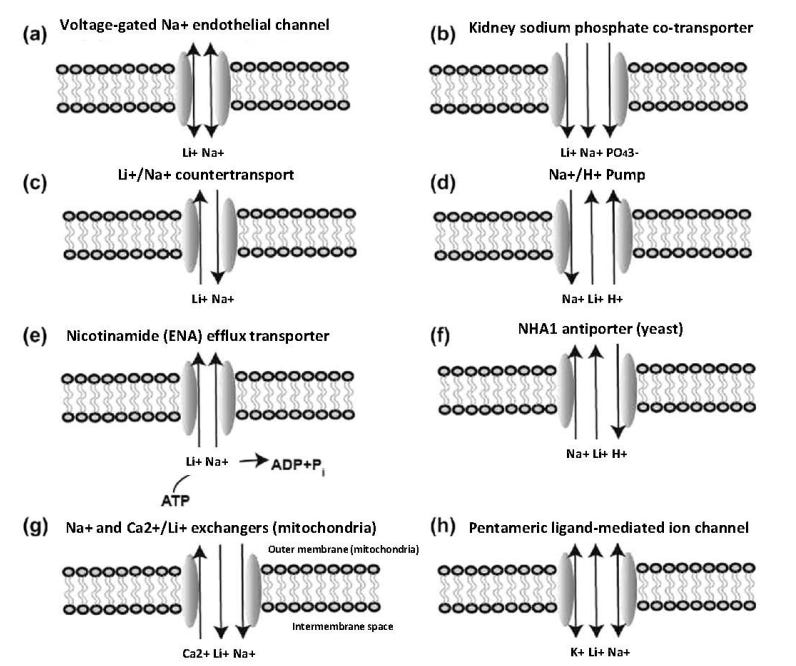
As early as 2002, Schrauzer described where lithium naturally occurs, the extent to which it is absorbed through the diet, and discussed whether it might be an essential nutrient. More recent work shows an accumulation in neurogenic brain regions. Further studies describe distribution patterns in reproductive tissues, particularly in the context of development and reproduction.
Lithium accumulates preferentially in neurogenic brain regions and influences hippocampal neurogenesis. Zanni et al. showed that lithium accumulates in regions of the brain where new nerve cells continue to form even in adulthood, and that it influences cell division and proliferation there. Palmos et al. showed that lithium is also linked to the formation of new nerve cells in human hippocampal progenitor cells. It is highly unlikely that a demonstrably elevated accumulation of lithium, of all elements, in embryonic tissues, reproductive organs, and brain regions where new nerve cells continue to form even in the adult brain occurs merely by chance. These are precisely the tissues characterized by high regenerative activity, stem cell turnover, and developmental plasticity. The claim that there is no evidence of absorption or regulation therefore once again disregards the existing evidence. The accurate statement would be: exactly how lithium is transported and kept in balance within the body has not yet been fully researched, but the available distribution data point to a biologically meaningful pattern of tissue distribution.
6. The central misconception: Essentiality is being confused with monotherapy
EFSA’s response reveals a fundamental problem: lithium is evidently being measured against criteria that are unsuited to systemically acting trace elements and multifactorial diseases. As I have repeatedly shown here, an essential factor need not necessarily cause a single, clearly delineated disease when it is absent. Nor can its restoration alone fully cure a multicausal disease. What matters instead is whether it
fulfills defined biological functions,
triggers functional impairments when its availability is reduced,
shows at least partially correctable effects upon renewed supply,
and acts through evolutionarily conserved, physiologically relevant mechanisms.
No one would consider vitamin D, magnesium, selenium, or omega-3 fatty acids biologically irrelevant simply because giving them alone does not fully cure Alzheimer’s, cancer, or cardiovascular disease—even though they are recognized as causal risk factors for these very conditions. Yet precisely this category error is what can be observed in the case of lithium: a causal risk factor is discredited because correcting it in isolation is (as expected) not sufficient to resolve a complex disease as a monotherapy.
A second fallacy compounds this problem. When lithium is understood primarily as a potential drug against Alzheimer’s, studies often reach for dosages just below the actual pharmaceutical dose used to treat bipolar disorder—in order to achieve as strong an effect as possible. Such entirely non-physiological dosages are then misleadingly labeled “low-dose,” even though they lie only just below the high, therapeutic dose known to cause serious side effects. These side effects—which are, in fact, entirely to be expected—are in turn used as an argument against lithium in general, even though they carry little weight for the question of nutritional essentiality in the microgram to low-milligram intake range; homeostasis at a systemic level is hardly to be achieved at such dosages—quite the opposite, in fact! At the same time, other deficiencies that also contribute to causing the disease process continue to be ignored, and thereby continue to drive it forward.
7. Conclusion
EFSA and the European Commission bear the responsibility of protecting the health of European citizens on the basis of the best available scientific knowledge. The decision not to recognize lithium as essential, or at least as a nutritionally relevant trace element, is therefore not a neutral one—nor is the ban on lithium in biologically relevant amounts in supplements. As long as lithium is denied recognition as an essential trace element—or that recognition is at least delayed—on the basis of scientifically untenable arguments, we will continue to lack official reference values for intake, public education about its physiological significance, scientifically grounded prevention strategies, and a clear regulatory framework for dietary supplementation.
This is especially problematic because neurodegenerative diseases such as Alzheimer’s—which are promoted by lithium deficiency, to name just one serious consequence—rank among Europe’s greatest public health challenges. If reduced physiological lithium availability contributes even in a small way to neurodegeneration, accelerated aging, diminished regenerative capacity, or mental instability, then continued regulatory delay means a needlessly avoidable loss of human life.
More research is, of course, necessary—that is always true. But this argument must not serve as a pretext for postponing a scientific and regulatory reassessment indefinitely, when the existing evidence already meets the standards by which other essential nutrients have been recognized in the past. With the Commission’s response, the scientific debate has thus reached a new stage: it is now out in the open which arguments have so far been raised against recognition—and these arguments do not reflect the current state of knowledge.
Documents
Parliamentary inquiry E-001488/2026: https://www.europarl.europa.eu/doceo/document/E-10-2026-001488_DE.html
European Commission’s response of July 3, 2026: https://michael-nehls.de/wp-content/uploads/2026/07/Answer-E-001488-2026.pdf
Presentations before the European Parliament:
June 18, 2025:
May 20, 2026:
Scientific sources and further reading
Aron et al. Lithium deficiency and the onset of Alzheimer’s disease. Nature, 2025.
https://www.nature.com/articles/s41586-025-09335-x
Nature News / research report on Aron et al. 2025.
https://www.nature.com/articles/d41586-025-02471-4
Nehls M: Unified theory of Alzheimer’s disease (UTAD): implications for prevention and curative therapy. J Mol Psychiatry, 2016. https://pmc.ncbi.nlm.nih.gov/articles/PMC4947325/
Stambolic et al. Lithium inhibits glycogen synthase kinase-3 activity and mimics Wingless signalling. Current Biology, 1996.
https://pubmed.ncbi.nlm.nih.gov/8994831/
Klein & Melton. A molecular mechanism for the effect of lithium on development. PNAS, 1996.
https://pubmed.ncbi.nlm.nih.gov/8710892/
Ryves & Harwood. Lithium inhibits GSK3 by competition with magnesium. Biochemical and Biophysical Research Communications, 2001.
https://pubmed.ncbi.nlm.nih.gov/11162580/
Pickett & O’Dell. Evidence for dietary essentiality of lithium in the rat. Biological Trace Element Research, 1992.
https://pubmed.ncbi.nlm.nih.gov/1384620/
Nutrient Requirements of the Laboratory Rat, National Academies / NCBI Bookshelf, lithium section.
https://www.ncbi.nlm.nih.gov/books/NBK231925/
Ostrenko et al. The effect of lithium salt with ascorbic acid on antioxidant status and productivity of gestating sows. Animals, 2022.
https://www.mdpi.com/2076-2615/12/7/915
Schrauzer. Lithium: occurrence, dietary intakes, nutritional essentiality. Journal of the American College of Nutrition, 2002.
https://pubmed.ncbi.nlm.nih.gov/11838882/
Zanni et al. Lithium accumulates in neurogenic brain regions as revealed by high-resolution ion imaging. Scientific Reports, 2017.
https://www.nature.com/articles/srep40726
Palmos et al. Lithium treatment and human hippocampal neurogenesis. Translational Psychiatry, 2021.
https://pmc.ncbi.nlm.nih.gov/articles/PMC8557207/
Nunes et al. Microdose lithium treatment stabilized cognitive impairment in patients with Alzheimer’s disease. Current Alzheimer Research, 2013.
https://pubmed.ncbi.nlm.nih.gov/22746245/
Kapusta et al. Lithium in drinking water and suicide mortality. British Journal of Psychiatry, 2011.
https://pubmed.ncbi.nlm.nih.gov/21525518/
Memon et al. Association between naturally occurring lithium in drinking water and suicide rates: systematic review and meta-analysis. British Journal of Psychiatry, 2020.
https://pubmed.ncbi.nlm.nih.gov/32716281/
Kessing et al. Association of lithium in drinking water with the incidence of dementia. JAMA Psychiatry, 2017.
https://pubmed.ncbi.nlm.nih.gov/28832877/
Zarse et al. Low-dose lithium uptake promotes longevity in humans and metazoans. PLoS ONE, 2011.
https://pubmed.ncbi.nlm.nih.gov/21301855/