

Autism
Causes, Preventive Measures, and Therapeutic Options

Introductory remarks
Yesterday at the memorial service for the cold-bloodedly murdered Charlie Kirk, President Trump told mourners that his administration has found an answer to autism and will reveal details imminently. Early reporting indicates that the announcement will suggest a link between acetaminophen use in pregnancy and autism risk, and will point to leucovorin as a potential therapy.
I have not yet examined the strength of the evidence for these particular claims in detail, so I withhold judgment on their validity. What must be said, however, is that any official statement on autism can no longer ignore the overwhelming body of evidence that has accumulated for years. What I expect, what all of us should expect, is a clear acknowledgment that autism is not the result of only a single trigger but of multicausal processes long documented in the scientific record. These include hippocampal vulnerability, chronic neuroinflammation, widespread deficiencies in essential micronutrients, and toxic exposures such as aluminum, pesticides, microplastics - and in particular aluminum-containing injections and vaccinations.
The decisive factors have been clear for a long time. It is overdue that they are communicated fully and without reduction to simplified headlines. The following article lays out these factors in detail and explains why only a systemic understanding can safeguard the mental health of future generations:
The number of children with autism spectrum disorders is rising at an alarming pace - far beyond what improved diagnostics alone can explain. While genetic causes are unlikely to account for this trend, a growing body of research points to modern lifestyle factors as key drivers. Central to this discussion is the role of the hippocampus, a brain region essential for social interaction and memory. This perspective highlights a culturally driven dilemma; one that must be addressed preventively and systemically to safeguard our children’s mental health.

Table of Contents
The Autism Pandemic
Characterizing a Diverse Phenomenon
Searching for Causes: Autism as a Hippocampal Developmental Disorder?
The Hippocampus: Its Unique Features Are Also Its Vulnerabilities
Autism as a Multicausal Consequence of a Biologically Incongruent Lifestyle?
Autism Resulting from Nutrient Deficiencies
6.1 Omega-3
6.2 Vitamin D and Other Essential Nutrients
6.3 Essential LithiumAutism as a Consequence of High Toxin Exposure?
7.1 “Mindfood” and Radiation Exposure
7.2 Fine Particulate Matter
7.3 Agricultural Chemicals
7.4 Microplastics
7.5 AluminumConclusion: Cause, Prevention, and Healing of Autism Spectrum Disorders?
8.1 Cause
8.2 Prevention
8.3 Healing
I. References
1. The Autism Pandemic
Hardly any other childhood developmental disorder has shown such a steep rise in new cases over the past decades as what is now called the autism spectrum. This increase cannot be explained merely by absolute numbers due to population growth. What matters is that the proportion of children with behavioral and developmental disorders is growing compared to children without such conditions. This is a trend that should deeply concern us, especially since it means the group of healthy children is shrinking in turn.
Surprisingly, this interpretation has struggled to gain traction and to prompt the level of alarm one would expect among those responsible for public health. A common counterargument is that more precise diagnostics have inflated autism rates. While this may play a role, it cannot possibly explain the enormous surge in new cases. Because the human genome cannot have changed so dramatically over the course of just two generations (and since there has been no evolutionary pressure that might drive such a genetic shift) genetics, in my view, can be ruled out as the cause of this pandemic-like rise. Yet genetic explanations continue to be put forward.
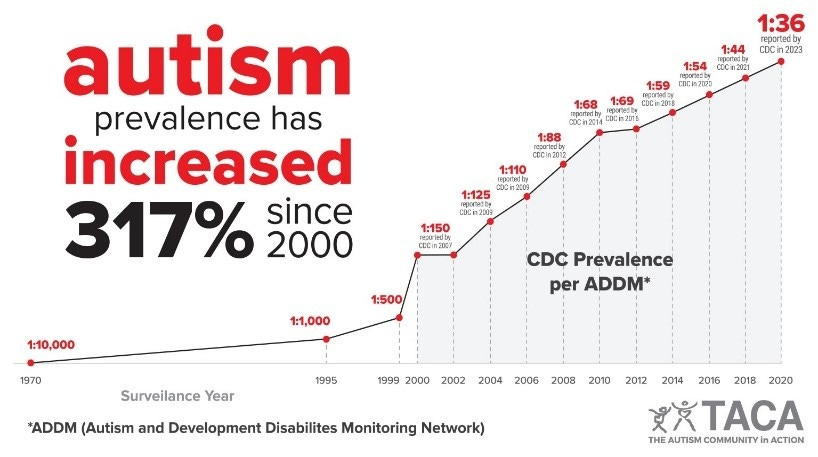
A very different question, however, is whether our genetic program - which has enabled us to thrive in natural environments for tens of thousands of years - can withstand the rapid cultural shifts and increasingly biologically incongruent lifestyle of the modern era. In fact, living conditions have changed so drastically in recent decades that it makes sense to focus research on modern diseases within the context of these novel circumstances. As the following graphic from the organization Autism Community in Action makes strikingly clear, something is profoundly amiss in today’s trajectory of human development.1
2. Characterizing a Diverse Phenomenon
But what exactly does autism mean? The autism spectrum describes a neurological developmental disorder marked by difficulties in social communication and by restricted or repetitive behaviors. While this definition sounds straightforward, the clinical picture is highly variable; hence the term “spectrum.” Diagnosis typically requires evidence of impaired social communication along with repetitive and/or limited behaviors. Beyond that, however, the way symptoms manifest can differ dramatically from one individual to another. Notably, I do not include what is commonly called Asperger’s syndrome within the autism spectrum. This is contrary to how it is classified in medical literature (see the following box: “Curse or Gift?”).
On the Question of Asperger’s Syndrome, “Curse or Gift?”: In my book The Algae Oil Revolution, I presented the following view:
Because of some overlapping difficulties in social interaction and variability in behavior, Asperger’s syndrome is often classified as part of the autism spectrum. I believe this is incorrect, as there are significant differences. Unlike children with so-called high-functioning autism, those with Asperger’s syndrome typically do not experience delays in language development; in fact, they often begin speaking unusually early. They also frequently display exceptional abilities in rational and analytical thinking and are, on average, highly intelligent. It may therefore be more accurate to see this not as a delayed development, but as a different developmental pathway altogether.
Through their unique way of perceiving the world, individuals with Asperger’s have contributed enormously to scientific, technological, and cultural progress. From a sociocultural perspective, Asperger’s syndrome (unlike autism) represents an invaluable part of the broader spectrum of human development.2
3. Searching for Causes: Autism as a Hippocampal Developmental Disorder?
There is, in fact, considerable evidence for a link between compromised hippocampal health and autism spectrum disorder (ASD). Behavioral symptoms typical of ASD usually appear very early in development—between 12 and 18 months of age.3 Reduced eye contact has even been observed as early as 6 months in some cases. Crucially, this 6–24-month window is also when the hippocampus (our autobiographical memory center) achieves functional maturity. This thumb-sized, evolutionarily ancient brain structure, located deep within the temporal lobes, is so named because of its seahorse-like shape. Only once the hippocampus becomes functionally mature (around the end of the second year) can we store and retrieve memories over the longer term.4 Experiences from earlier periods largely escape conscious recall. The fact that hippocampal maturation coincides with the age at which early autistic symptoms emerge can therefore be interpreted as a clue to a developmental connection.
Further support comes from the hippocampus’s key roles in social interaction, memory, and spatial cognition. These are precisely the domains that are often disrupted in children with autism. Indeed, studies have shown that structural alterations of the hippocampus are widespread in children and adolescents with ASD, pointing to atypical development of the structure and its connections with the rest of the brain. An excellent 2021 review summarizes this in detail5, compiling extensive evidence for hippocampal involvement in the development of autistic symptoms and citing numerous studies that demonstrate disrupted functional activity.
What does it gain us to place hippocampal dysfunction at the center of autistic development? Quite a lot, because it offers a systemic explanatory framework and, at the same time, a path toward prevention and treatment, which I will address below. For now, I invite you to step back with me and unpack the broader context that leads to this conclusion.
4. The Hippocampus: Its Unique Features Are Also Its Vulnerabilities
Let’s first take a closer look at the functions of the hippocampus. What makes it unique is its ability to generate new nerve cells throughout life. The integration of these cells into the hippocampal network is essential for socially appropriate interaction, learning, planning, and reasoning (but also for concentration, emotional resilience, and human curiosity) the lifelong drive to learn and grow. This process, known as adult hippocampal neurogenesis, is extremely sensitive and can be disrupted by many factors, including nutrient deficiencies, environmental toxins, or social stress. The common denominator behind these negative influences on hippocampal development and function is neuroinflammation - inflammation of nervous tissue - that blocks the production and integration of new neurons.
Chronic neuroinflammation is therefore very likely the critical driver behind conditions such as post-traumatic stress disorder, depression, and ultimately Alzheimer’s disease. I first outlined this in my 2016 review article, Unified Theory of Alzheimer’s Disease (UTAD): Implications for Prevention and Curative Therapy.6 Since then - and unsurprisingly from this perspective - an increasing number of studies have also linked neuroinflammation, triggered by our society’s increasingly biologically incongruent lifestyle, to the development of autism.7 In tracing the causes of hippocampal-damaging neuroinflammation, we also uncover factors that are likely to play a key role in the prevention and treatment of autism.
5. Autism: A Multicausal Consequence of a Biologically Incongruent Lifestyle?
Before we turn to some well-documented causes of autistic developmental disorders, one point must be made: all of us - usually without realizing it - are victims of an increasingly biologically incongruent, and therefore inherently harmful, cultural evolution. This affects our children directly and indirectly, and as adults we are responsible for their well-being. When the possibility arises that cultural change - and, quite specifically, our own lifestyle - may be at the root of childhood disorders and developmental problems, the natural reaction is to resist that idea. We instinctively ask: Am I to blame? But because these changes in lifestyle are culturally driven and no longer “species-appropriate,” we are not perpetrators but - this is crucial - victims, at least as long as we remain unaware or lack the mental strength to act. If we refuse to confront this reality and investigate what has gone wrong in today’s societal development, we will remain powerless victims.
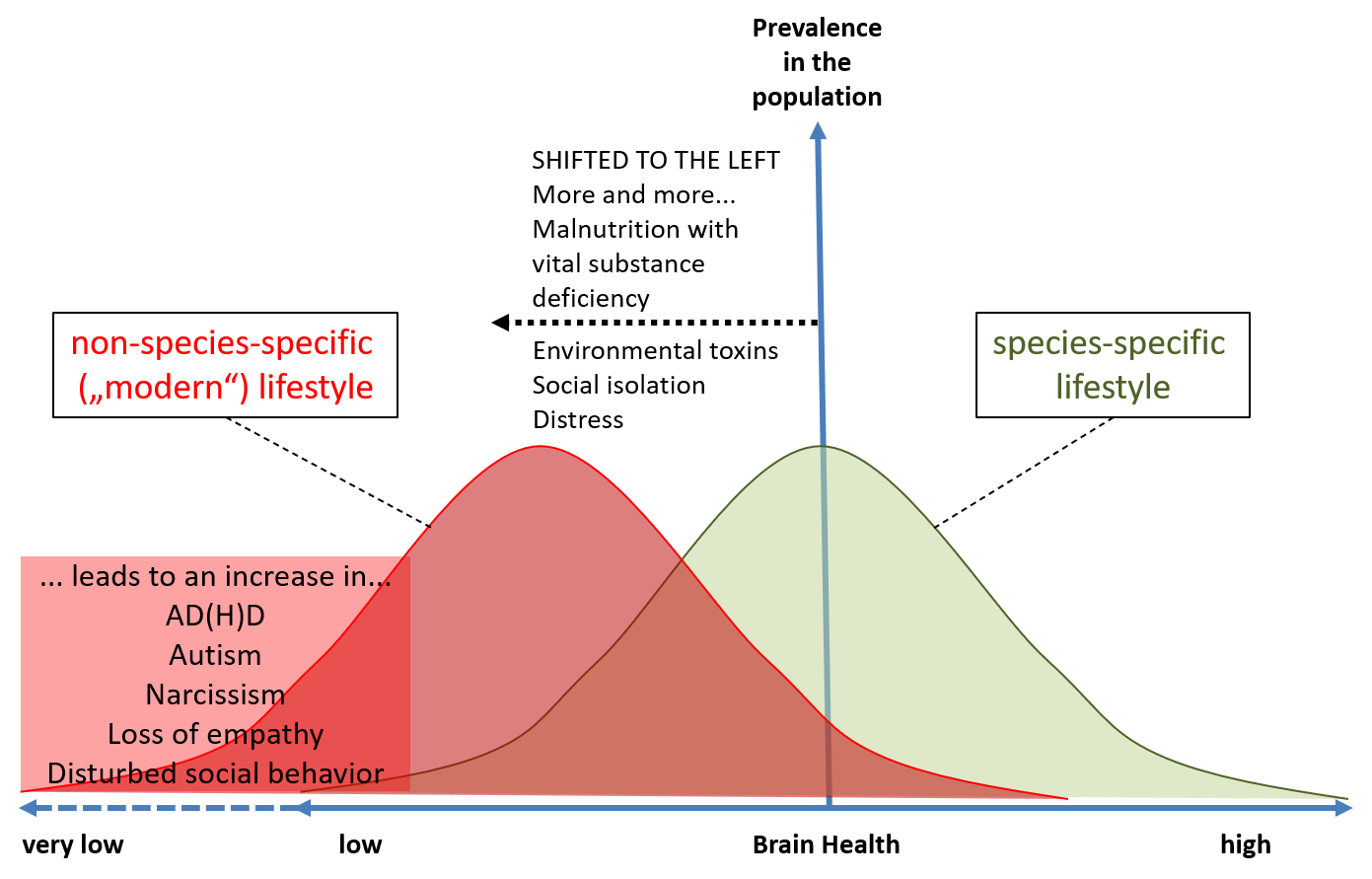
And the issue is not autism alone. Rates of childhood anxiety disorders, depression, attention-deficit (hyperactivity) disorders (ADHD), and even schizophrenia are also rising sharply. All of these conditions ultimately point, in understandable ways, to increasingly dysfunctional hippocampal development in young people - as illustrated by the following graphic. Due to our ever more biologically incongruent lifestyle, the mental health of society as a whole is shifting leftward, leading not only to more developmental disorders but also to higher rates of anxiety, depression, and Alzheimer’s disease.
Acknowledging this level of responsibility can feel liberating because it means realizing we actually do have influence over something that once seemed like unchangeable fate. Not everyone, however, interprets it this way or recognizes the opportunity. I have often witnessed very different reactions to such evidence. For example: after publishing my UTAD article, I was accused by organizations with ties to the pharmaceutical industry of blaming patients for their Alzheimer’s disease. This, despite the fact that I had identified a cultural misdevelopment that almost inevitably leads to Alzheimer’s, and more importantly, offered a tangible solution to what had previously been deemed an unsolvable problem. Such cynical attacks are anything but constructive. They only distract from what urgently needs to be done: broad education about all hippocampal disorders, which include not only Alzheimer’s but also many childhood developmental conditions.
We can state clearly: since around the mid-20th century, developmental disorders in children have risen dramatically. At the same time, profound cultural changes have taken place. A closer look reveals that all of these shifts correlate, sometimes more strongly and sometimes less, with the rising rates of such disorders, and autism is no exception. Yet correlation alone is not proof of causation. To establish causality, we need additional evidence: concrete indications of a potential damaging mechanism and, ideally, confirmation from animal models or similar approaches.
Because multiple studies have already linked neuroinflammation with neurodevelopmental disorders such as autism, we now have a practical starting point. Just as neuroinflammation can be triggered by various environmental toxins and harmful exposures, as well as by deficiencies in nearly all essential micronutrients, its prevention becomes possible through two complementary strategies: reducing harmful exposures and correcting deficiencies. Ideally, by pursuing a more biologically appropriate way of living and by creating such conditions for children with autism, we may uncover further evidence of causal links. Even if the developmental disorder cannot be fully "repaired" (which still remains to be proven), addressing the persistent neuroinflammation these children suffer from offers a pathway to meaningful relief.
Still, we must remember that the causes are varied and can reinforce one another. This means we are dealing with a multicausal problem, where isolated measures may have limited effect. The solution lies in adopting a systemic prevention strategy, which naturally applies to therapeutic interventions as well. The general recommendations for supporting hippocampal health, in fact for supporting a healthy body, mind, and spirit overall, remain the same here as elsewhere. But let us now review some key factors more closely and consider why they can serve as building blocks in the prevention and treatment of autism.
6. Autism Linked to Nutrient Deficiencies
Omega-3
One of the most widespread chronic deficiencies in essential micronutrients is a lack of aquatic omega-3 fatty acids. These include eicosapentaenoic acid (EPA) and docosahexaenoic acid (DHA). Both serve as building blocks for anti-inflammatory signaling molecules, while DHA is also indispensable for neurogenesis and the formation of synapses. Another essential building block for nerve cells is arachidonic acid (AA), an omega-6 fatty acid. In contrast to DHA, however, AA is increasingly consumed in excess due to the modern industrial diet. This occurs either directly through animal products or indirectly through its precursor linoleic acid, which is present in large amounts in oils such as sunflower and linseed. Unlike DHA, AA acts as a precursor to pro-inflammatory signaling molecules.
Both AA and DHA are needed, not only for hippocampal neurogenesis but also for proper (homeostatic) immune regulation. The imbalance of high AA intake combined with DHA deficiency is therefore highly problematic for brain development. I describe this issue in detail in my book The Algae Oil Revolution. Specifically regarding autism, I have already written there:
In the mid-20th century, only about 1 in 2,000 children—just 0.05 percent—was affected by autism. Today, the rate has risen to more than 40 children out of every 2,000, which is over 2 percent.8 No other childhood mental disorder, not even ADHD, has increased so rapidly. This surge in autism prevalence has paralleled a rise in diets rich in omega-6 fatty acids—particularly linoleic acid and its bioactive derivative arachidonic acid (AA)—and a simultaneous decline in the intake of high-quality omega-3 fatty acids.9 An excess of AA leads to a relative deficiency of DHA, even if an expectant mother consumes sufficient DHA. This is because the two fatty acids compete with each other, both in crossing the placenta and later in being transported into the child’s brain.
An absolute deficiency of aquatic omega-3 fatty acids further worsens the shortage in the developing brain. This disrupts the formation of synapses in the frontal cortex and impairs the connectivity of neurons, which results in the well-documented neural disturbances characteristic of autism.10 Outside this critical early developmental window, correcting such deficits is difficult, and most intervention studies with omega-3s have unfortunately produced disappointing results.11
Expectations for treating autism with omega-3 must therefore remain realistic, even though there is great potential for prevention through omega-3 intake. The reason is clear: if autism arises from many contributing factors, in other words a multicausal process, it would be unrealistic to assume that correcting a single deficiency could bring about a major improvement. Still, as I noted in The Algae Oil Revolution, supplementation with omega-3 is not without value. In one study, children with autism who received aquatic omega-3 fatty acids showed improvements in concentration, eye contact, language development, and motor skills.12
Because supplementation with aquatic omega-3 fatty acids demonstrated a measurable therapeutic effect even as a single intervention, a causal link between deficiency and symptoms appears plausible. From a preventive standpoint, this means it is reasonable to assume that sufficient intake (ideally reflected by an omega-3 index of about 11 in both mother and child)could help protect against dysfunctional development. It is well established that aquatic omega-3 fatty acids are essential for optimal overall cognitive development, and thus they are of great preventive importance for conditions within the autism spectrum.
Vitamin D und andere Vitalstoffe
Children with autism consistently show significantly lower vitamin D levels compared to typically developing children. Since autism is not a single-cause developmental disorder, however, this finding should be seen as one step in the search for additional contributing factors. The ultimate goal must be to correct all deficiencies that could play a causal role, both preventively and therapeutically, in order to ensure optimal brain development. This calls for a systemic approach. This point is reinforced by the fact that strong correlations have also been demonstrated between deficiencies in other essential micronutrients, such as B9 and B12, in both mother and child, and the later development of autism.13 The pattern is consistent: the lower the nutrient levels, the higher the risk of developing autism. In addition, the severity of autistic symptoms has been found to correlate strongly with the degree of vitamin D deficiency. The common denominator across all of these deficiencies, whether individually or in combination, is simply inadequate supply, meaning levels below what the body requires. As a result, brain maturation is impaired, and deficiency-driven neuroinflammation is triggered. This should not be surprising, since neither the brain nor the immune system can function without essential nutrients. It is also reasonable to expect that such correlations will be found for all essential micronutrients, because the developing hippocampus cannot do without a single one (this is the principle of the “law of the minimum”).
The strongest evidence for causality is improvement in symptoms after correcting the suspected cause, for example a deficiency in an essential micronutrient. Two critical limitations must be noted here:
In most cases, intervention begins only after autistic symptoms have already appeared, which means treatment comes too late.
Most studies supplement only a single nutrient (as with aquatic fatty acids, described earlier), even though, as emphasized repeatedly, autism is multicausal and multiple deficiencies usually coexist.
Despite these limitations in study design, results show that daily supplementation with vitamin D (with an ideal target value of 125 nmol/L) can significantly improve autistic symptoms. These improvements are reflected in the CARS score (Childhood Autism Rating Scale), specifically in reduced stereotypical behaviors and longer periods of eye contact and attention.14
One cannot help but ask: what would have happened if researchers had combined vitamin D, which has proven effective, with omega-3, which has also shown efficacy, and further included B9 and B12, both of which show strong correlations? Would the effect have been greater than the sum of the individual interventions? This is an important question to pursue, particularly given the fundamental importance of eliminating any deficiency in these essential nutrients.
Essential Lithium
Given that several studies have established a link between neuroinflammation and the neurodevelopmental disorder autism, daily intake of low-dose, or essential, lithium appears to be a particularly promising approach. As I have shown in a detailed article on lithium, this trace element (which is present only in very small amounts in our diet) reduces inflammatory processes, especially neuroinflammation, by inhibiting a key signaling mediator in inflammatory pathways. In my book The Conspiracy against Lithium , which will be published in November 2025, I discuss the astonishing reasons why this vital nutrient has still not been officially recognized as an essential trace element. My aim is to demonstrate its fundamental importance for mental, cognitive, and physical development, as well as for maintaining health into old age. This essential role naturally applies to childhood development as well. A deficiency in essential lithium not only increases the risk of neuroinflammation but also contributes to related hippocampal developmental disorders and diseases. Correcting lithium deficiency can suppress inflammation even under ongoing deficiency conditions. Here again, we find confirmation for a plausible causal relationship: children with hippocampal developmental and performance disorders (such as autism and ADHD) show clear therapeutic benefits from daily intake of a small, essential dose of lithium in the form of lithium orotate.
As I explain in my book The Indoctrinated Brain, there unfortunately appears to be a broader sociopolitical interest in maintaining reduced mental performance across society, which could also explain the ban on lithium-containing dietary supplements. In this context, for example, there is a study that claims even the smallest amounts of lithium, such as those found in tap water, increase the risk of autism. According to this study, tiny amounts of lithium are supposed to harm the developing brain, producing exactly the opposite of what all other research shows—that lithium protects the brain. On closer inspection, however, this conclusion does not hold up. I have logically refuted this study on my website in the FAQ section under the question “Does lithium in drinking or tap water cause autism?”
7. Autism as a Consequence of High Toxin Exposure?
An increasing number of people suffer from health problems. These issues are caused partly by easily correctable deficiencies in essential micronutrients such as vitamins and trace elements, and partly by an excess of pro-inflammatory dietary components like omega-6 fatty acids, trans fats, and sugar. At the same time, people are exposed to a wide range of neurotoxic and pro-inflammatory burdens, including fine particulate matter, microplastics, aluminum and other toxic heavy metals, pesticides and herbicides such as glyphosate, as well as brain-damaging electromagnetic radiation from sources like 4G, 5G, and intensive cell phone use. In the context of the multicausal processes already described, prevention and therapy must therefore address not only poor diet and micronutrient deficiencies but also work toward reducing toxic exposures to a practical minimum.
It is important not to lose sight of a key point: while a healthy diet of organically grown foods can provide all essential and beneficial nutrients, complete avoidance of all harmful exposures is simply impossible. We can decide how long we hold a smartphone to our ear, but we cannot completely withdraw from modern communication technologies without sacrificing a functional professional or social life, nor can we escape the coverage zones of cell towers. Attempting the impossible goal of eliminating every potential toxin would almost certainly create significant psychological stress, which itself can damage brain health. A balanced approach is therefore required. Many exposures can in fact be tolerated when the body is equipped with strong defenses through a balanced and biologically appropriate lifestyle.
“Mindfood” and Radiation Exposure
Scientific studies have shown a connection between extended screen time, the resulting unnatural flood of information, and autism.15 In addition to the overload of content, there is a troubling combination with increased and cumulative radiation exposure, which has harmful effects particularly on the developing brains of children. A causal link to the development of autism has not yet been established, so it is unclear how significant this overload and radiation exposure may be among the many plausible contributing factors.
Even so, the fact that radiation exposure interferes with brain development in children and has been shown to promote neuroinflammation, with all its neuropathological consequences, should be enough to call into question the current trend toward ever more intensive network expansions (5G) and the growing digitalization of childhood. Especially in the context of neurological developmental disorders such as autism, this factor cannot be left out of any discussion of harmful influences, since it almost certainly contributes to an already difficult situation—even if a direct causal connection may never be definitively proven.
Fine Particulate Matter
Researchers at Harvard University in Boston have reported a possible link between levels of fine particulate air pollution and the risk of autism.16 In animal studies, it has also been shown—unsurprisingly—that fine particulate matter can trigger neuroinflammation.17 However, extremely high levels of particulate pollution already existed during the Industrial Revolution, beginning in the mid-18th century, and these were associated with serious vitamin D deficiencies at the time.18 While fine particulate matter is certainly harmful to health, autism as a widespread developmental disorder is a much more recent phenomenon. For this reason, I consider other causes to be more likely drivers of today’s dramatic rise.
Agricultural Chemicals
There is a clear link between the rising use of pesticides in agriculture and the risk of autism. In particular, exposure to herbicides such as glyphosate has been shown in a 2014 study to correlate strongly with the disorder.19 In 2020, researchers published the results of a meta-analysis that combined data from several studies and found “a remarkable association between maternal exposure to insecticides such as pyrethroids and organophosphates during pregnancy or in the early years of childhood and the risk of developing autism”.20 The same problem exists for glyphosate, the most widely used herbicide worldwide.21 Animal studies have even demonstrated causality for this link22.
Given the evidence, it is clear that pesticide and glyphosate exposure represents one of the most urgent factors to eliminate from both individual and societal food systems in order to reduce the overall risk of autism. Fortunately, reducing pesticide and glyphosate intake is possible not only by growing one’s own produce but also, to a large extent, by purchasing from trusted farmers and from certified organic sources.
Microplastics
Exposure to microplastics during pregnancy has also been identified as a potential risk factor for autism.23 Sources of microplastics include not only certain cosmetic products but also a variety of other consumer goods. Through mindful consumption choices, many of these sources can be significantly reduced or eliminated.24
Aluminum
Another strong correlation with autism risk is found with aluminum, which is well known to provoke a powerful inflammatory response in the brain. Because of its pro-inflammatory effect, aluminum salts are widely used in vaccines as so-called adjuvants (from the Latin adjuvare, meaning “to help”), where they serve to boost immune responses through inflammation-driven mechanisms.
Applying the so-called Hill criteria—standards used in epidemiological research to evaluate whether a suspected cause is likely to be causally linked to an observed effect—researchers investigated whether exposure to aluminum from vaccines might have contributed to the rising autism rates seen in the Western world. In a 2011 article, they wrote:
“Our results show that: (i) children from countries with the highest ASD prevalence appear to have the highest exposure to Al from vaccines; (ii) the increase in exposure to Al adjuvants significantly correlates with the increase in ASD prevalence in the United States observed over the last two decades (Pearson r=0.92, p<0.0001); and (iii) a significant correlation exists between the amounts of Al administered to preschool children and the current prevalence of ASD in seven Western countries, particularly at 3-4 months of age (Pearson r=0.89-0.94, p=0.0018-0.0248). The application of the Hill's criteria to these data indicates that the correlation between Al in vaccines and ASD may be causal. Because children represent a fraction of the population most at risk for complications following exposure to Al, a more rigorous evaluation of Al adjuvant safety seems warranted.”25
At this point we may be approaching one of the main factors behind the high autism rates, especially given that a causal link has been observed in vaccinated sheep. Compared with controls, animals in the two groups that received either vaccine containing aluminum hydroxide or aluminum hydroxide alone showed marked changes in individual and social behavior.26 They were easily excitable and tended toward compulsive eating. Most notably, natural social interactions were significantly reduced, while aggressive interactions and stereotypies increased sharply, all of which are clinical features commonly seen in autism that share a single, causal denominator: injection of aluminum hydroxide. In both groups, elevated levels of stress biomarkers were also found, which is not surprising.
What may sound astonishing to some has led many parents who are already aware of these underreported connections to a very practical question: Are some vaccines, or even all vaccines, truly necessary, and if not, how can I concretely protect my children? For natural protection, I can briefly refer to the discussion in my book The Indoctrinated Brain, where I address the COVID-19 issue as an example. Drawing on numerous clinical studies, I show that with vitamin D prophylaxis alone, with a target value of 125 nmol/L or 50 ng/mL for 25-hydroxy-vitamin D, virtually no one would need to die from COVID-19. I also conveyed this in an open letter to the German Federal Minister of Health.
Vaccines are not the only source of aluminum exposure. Many other completely unnatural sources contribute cumulatively to aluminum intoxication and, in turn, to potential brain damage. For example, many sweets contain this toxic light metal in the form of additives such as aluminum-based dyes.27 Various aluminum silicates (E 554, E 555, E 556, and E 559) are permitted in the food industry as anti-caking agents. As Hans-Ullrich Grimm writes in his book Die Ernährungsfalle (The Food Trap):
“In addition to aluminum-based food dyes, there are several other aluminum-containing additives: from pure aluminum (E 173) to aluminum sulfates (E 550 to E 553) to aluminum silicate (E 559). They are used for industrially packaged egg whites and for candied, crystallized, or glazed fruits and vegetables, as well as anti-caking agents in sauce powders and instant soups. They also prevent pre-sliced cheese from sticking together.”28
According to the Bavarian State Office for Health and Food Safety (LGL) in Germany, this is supposedly not a serious problem, since “based on available data, the European Food Safety Authority (EFSA), which advises the European Commission, established in 2008 a tolerable weekly intake (TWI) of 1 mg aluminum per kilogram of body weight, in line with a precautionary value set by the World Health Organization (WHO) in 2006.”29 The LGL explains that this amount “can, based on current knowledge, be ingested weekly over a lifetime without posing a health risk.” For a 70-kilogram adult, that translates to 70 mg of aluminum per week, or 10 mg per day, allegedly without concern.
To grasp the absurdity of these figures, consider the following comparison: dietary supplements containing essential lithium are banned by the European Commission, even though an intake of about 1 mg per day would be ideal for human brain health. By contrast, the demonstrably neurotoxic light metal aluminum is permitted in food, with an average person allowed to consume up to 10 mg daily. The question of whether the EU Commission, together with its advisory EFSA, and the WHO established these unusually high limits in the interest of genuine public health or of industry is, in reality, purely rhetorical. Moreover, it is unfortunately no longer in doubt that the general population consumes even more aluminum than these already questionable limits allow. As the 2008 EFSA report cited by the LGL itself acknowledges, “a significant proportion of the European population exceeded the already very high aluminum limit.”
It should be obvious: only those who prepare their meals as often as possible with organic ingredients, or obtain food from kitchens that commit to such standards, stand a chance of avoiding the widespread, industry-approved food-based intoxication that has become part of daily life.
8. Conclusion: Cause, Prevention, and Healing of Autism Spectrum Disorder
Cause
Research into the causes of autism has made enormous progress in recent decades. Hardly a day passes without new links being identified between the rising rates of developmental disorders in childhood, including autism spectrum disorders, and new potential causes, while earlier suspicions are further confirmed. According to the most recent findings presented here, autism should be understood as a developmental disorder triggered by neuroinflammation during a critical window between the end of the first year and the end of the second year of life, when the hippocampus, our autobiographical memory center, is undergoing functional maturation. The structural and functional abnormalities documented during this stage result in the clinical symptoms observed. All known risk factors could contribute to this process and push the proverbial barrel to overflow. In addition to nutritional deficiencies and other environmental factors, which should of course be addressed within a systemic approach, aluminum hydroxide-containing vaccines in particular meet the decisive Hill criteria for causality. This has also been confirmed in animal studies.
Prevention
With the unified explanation of autism as primarily a hippocampal developmental disorder, it becomes clear that our modern living conditions are no longer in line with our natural needs. This crucial brain structure, essential for memory and social interaction, is evidently being damaged or hindered in its development. From my perspective, only a systemic approach can provide effective prevention. Each time a new potential cause is discovered and highlighted, we must not overlook other causes with similar or even stronger evidence. Focusing too narrowly on one factor could, for example, lead us to eliminate aluminum-containing vaccines while mistakenly believing that the risk of hippocampal developmental disorders has been entirely removed. A healthy hippocampal development requires more than just reducing neuroinflammatory toxins.
We should continually ask ourselves what would be natural. For instance, it used to be common to breastfeed for the first two years of life, which provided infants with an immunological shield. This timeframe was sufficient for the autobiographical memory center to mature. Under proper hygienic conditions, even a vaccination against tetanus in this very early phase of life is difficult to justify—perhaps in all cases (see Turtles All the Way Down). This also applies to so-called pseudo-vaccinations, even if they do not contain aluminum hydroxide, such as the genetic interventions used against COVID-19. These cause brain-damaging neuroinflammation by entirely different mechanisms, as seen in post-vaccine syndromes or signs of accelerated Alzheimer’s disease. In practical terms, it means that all people (especially parents) must inform themselves, since public health authorities can be suspected of either lacking the best intentions or being misled by structural dependencies. For example, the U.S. Centers for Disease Control and Prevention (CDC), the counterpart to Germany’s Robert Koch Institute, currently recommends three mRNA injections against COVID-19 for infants at the end of their first year of life, even though the only real risk for this age group is precisely the neuroinflammation caused by these genetic agents.
Hippocampal developmental disorders such as autism and schizophrenia, as well as hippocampal diseases like Alzheimer’s, are multicausal. This means we must think systemically—and most importantly, think for ourselves—in order to prevent them. Systemic thinking requires recognizing that even with a critical stance toward vaccines, which may work but are not necessary in the context of a natural lifestyle, there are many other neurotoxic factors to consider. These include aluminum, microplastics, and pesticides in food. In addition, much of modern society suffers from a damaging lack of key micronutrients. Over 90 percent of people are severely deficient in vitamin D and omega-3, to name just two examples, both of which can contribute to hippocampal damage and related disorders. It is therefore essential to ensure supplementation with all critical nutrients so that a child’s developing brain has the best chance to mature properly. A well-nourished body can tolerate a certain level of toxins—since some exposure is unavoidable—without immediately leading to developmental issues or disease. It can also defend itself against natural infections, recover effectively, and build lifelong immunity.
To eliminate hippocampal disorders such as autism, ADHD, schizophrenia, many anxiety and depressive disorders, and even Alzheimer’s on a societal scale, we must not choose one measure over another. The goal must be to restore all conditions to their natural state and thereby put an end to the multiple cultural causes and harmful developments at their root.
Healing
I do not want to raise false hopes when it comes to the possibility of healing, but given that autism appears to be
a hippocampal maldevelopment rooted in an increasingly unnatural, culturally driven lifestyle,
a multicausal developmental disorder, and
a condition affecting a brain region that retains the lifelong ability to regenerate through neurogenesis,
a systemic therapeutic approach could achieve far more than isolated measures. At present, there is no multicausal study—neither for prevention nor for treatment—that has eliminated all known contributing factors at once. It is doubtful whether such a study will ever be conducted, and even more doubtful whether it would truly be needed, since the harmful effects of each individual factor have already been clearly demonstrated.
So what reason is there not to begin addressing these damaging influences right now? Why not ensure that people are properly informed so that society as a whole can work toward restoring natural living conditions for themselves and their children? I am confident—for reasons I hope I have made clear—that the incidence of hippocampal developmental disorders and related conditions would decline dramatically in the process. At present, however, we are witnessing how an increasingly unnatural lifestyle condemns more and more people to lives of suffering. Still, there is hope that even those already affected may at least experience significant relief.
I. References
https://tacanow.org/autism-prevalence/
How our autistic ancestors played an important role in human evolution. The Conversation 2017, https://theconversation.com/how-our-autistic-ancestors-played-an-important-role-in-human-evolution-73477
Uke P, Gaikwad S, Vagha K, Wandile S. Unraveling the Spectrum: A Comprehensive Review of Autism Spectrum Disorder in India. Cureus. 2024 Jun 20;16(6):e62753. doi: 10.7759/cureus.62753. PMID: 39036210; PMCID: PMC11260197
Donato F, Alberini CM, Amso D, Dragoi G, Dranovsky A, Newcombe NS. The Ontogeny of Hippocampus-Dependent Memories. J Neurosci. 2021 Feb 3;41(5):920-926. doi: 10.1523/JNEUROSCI.1651-20.2020. Epub 2020 Dec 16. PMID: 33328296; PMCID: PMC7880290
Banker SM, Gu X, Schiller D, Foss-Feig JH. Hippocampal contributions to social and cognitive deficits in autism spectrum disorder. Trends Neurosci. 2021 Oct;44(10):793-807. doi: 10.1016/j.tins.2021.08.005. Epub 2021 Sep 11. PMID: 34521563; PMCID: PMC8484056
Nehls M. Unified theory of Alzheimer’s disease (UTAD): implications for prevention and curative therapy. J Mol Psychiatry. 2016 Jul 15;4:3. doi: 10.1186/s40303-016-0018-8. PMID: 27429752; PMCID: PMC4947325
Matta SM, Hill-Yardin EL, Crack PJ. The influence of neuroinflammation in Autism Spectrum Disorder. Brain Behav Immun. 2019 Jul;79:75-90. doi: 10.1016/j.bbi.2019.04.037
Fombonne E. Epidemiology of pervasive developmental disorders. Pediatr Res. 2009 Jun;65(6):591-8. doi: 10.1203/PDR.0b013e31819e7203. PMID: 19218885
van Elst K, Bruining H, Birtoli B, Terreaux C, Buitelaar JK, Kas MJ. Food for thought: dietary changes in essential fatty acid ratios and the increase in autism spectrum disorders. Neurosci Biobehav Rev. 2014 Sep;45:369-78. doi: 10.1016/j.neubiorev.2014.07.004. Epub 2014 Jul 12. PMID: 25025657.
Chen J, Yu S, Fu Y, Li X. Synaptic proteins and receptors defects in autism spectrum disorders. Front Cell Neurosci. 2014 Sep 11;8:276. doi: 10.3389/fncel.2014.00276. PMID: 25309321; PMCID: PMC4161164
James S, Montgomery P, Williams K. Omega-3 fatty acids supplementation for autism spectrum disorders (ASD). Cochrane Database Syst Rev. 2011 Nov 9;(11):CD007992. doi: 10.1002/14651858.CD007992.pub2. PMID: 22071839
Meguid NA, Atta HM, Gouda AS, Khalil RO. Role of polyunsaturated fatty acids in the management of Egyptian children with autism. Clin Biochem. 2008 Sep;41(13):1044-8. doi: 10.1016/j.clinbiochem.2008.05.013. Epub 2008 Jun 12. PMID: 18582451
Gusso D, Prauchner GRK, Rieder AS, Wyse ATS. Biological Pathways Associated with Vitamins in Autism Spectrum Disorder. Neurotox Res. 2023 Dec;41(6):730-740. doi: 10.1007/s12640-023-00674-z. Epub 2023 Oct 21. PMID: 37864660
Wang J, Huang H, Liu C, Zhang Y, Wang W, Zou Z, Yang L, He X, Wu J, Ma J, Liu Y. Research Progress on the Role of Vitamin D in Autism Spectrum Disorder. Front Behav Neurosci. 2022 May 10;16:859151. doi: 10.3389/fnbeh.2022.859151. PMID: 35619598; PMCID: PMC9128593.; Kittana M, Ahmadani A, Stojanovska L, Attlee A. The Role of Vitamin D Supplementation in Children with Autism Spectrum Disorder: A Narrative Review. Nutrients. 2021 Dec 22;14(1):26. doi: 10.3390/nu14010026. PMID: 35010901; PMCID: PMC8746934
Alrahili N et al: The Association Between Screen Time Exposure and Autism Spectrum Disorder-Like Symptoms in Children. Cureus. 2021 Oct 14;13(10):e18787. doi: 10.7759/cureus.18787. PMID: 34804653; PMCID: PMC8592297
Rahman MM et al: Prenatal Exposure to Air Pollution and Autism Spectrum Disorder: Sensitive Windows of Exposure and Sex Differences. Environ Health Perspect. 2022 Jan;130(1):17008. doi: 10.1289/EHP9509. Epub 2022 Jan 18. PMID: 35040691; PMCID: PMC8765363
Li K et al: Early Postnatal Exposure to Airborne Fine Particulate Matter Induces Autism-like Phenotypes in Male Rats. Toxicol Sci. 2018 Mar 1;162(1):189-199. doi: 10.1093/toxsci/kfx240. PMID: 29121345
Fowler D et al: A chronology of global air quality. Philos Trans A Math Phys Eng Sci. 2020 Oct 30;378(2183):20190314. doi: 10.1098/rsta.2019.0314. Epub 2020 Sep 28. Erratum in: Philos Trans A Math Phys Eng Sci. 2021 Jul 12;379(2201):20210113. doi: 10.1098/rsta.2021.0113. PMID: 32981430; PMCID: PMC7536029
Shelton JF et al: disorders and prenatal residential proximity to agricultural pesticides: the CHARGE study. Environ Health Perspect. 2014 Oct;122(10):1103-9. doi: 10.1289/ehp.1307044. Epub 2014 Jan 23. Erratum in: Environ Health Perspect. 2014 Oct;122(10):A266. PMID: 24954055; PMCID: PMC4181917
Miani A et al: Autism Spectrum Disorder and Prenatal or Early Life Exposure to Pesticides: A Short Review. Int J Environ Res Public Health. 2021 Oct 19;18(20):10991. doi: 10.3390/ijerph182010991. PMID: 34682738; PMCID: PMC8535369
Pu Y et al: Maternal glyphosate exposure causes autism-like behaviors in offspring through increased expression of soluble epoxide hydrolase. Proc Natl Acad Sci U S A. 2020 May 26;117(21):11753-11759. doi: 10.1073/pnas.1922287117. Epub 2020 May 12. Erratum in: Proc Natl Acad Sci U S A. 2021 Feb 2;118(5):e2100100118. doi: 10.1073/pnas.2100100118. PMID: 32398374; PMCID: PMC7260984
Pu Y et al: Autism-like Behaviors in Male Juvenile Offspring after Maternal Glyphosate Exposure. Clin Psychopharmacol Neurosci. 2021 Aug 31;19(3):554-558. doi: 10.9758/cpn.2021.19.3.554. PMID: 34294625; PMCID: PMC8316667
Zaheer J et al: Pre/post-natal exposure to microplastic as a potential risk factor for autism spectrum disorder. Environ Int. 2022 Mar;161:107121. doi: 10.1016/j.envint.2022.107121. Epub 2022 Feb 3. PMID: 35134716
https://www.ndr.de/ratgeber/verbraucher/Mikroplastik-Wo-ist-es-drin-wie-kommt-es-in-Koerper-,mikroplastik388.html
Tomljenovic L, Shaw CA. Do aluminum vaccine adjuvants contribute to the rising prevalence of autism? J Inorg Biochem. 2011 Nov;105(11):1489-99. doi: 10.1016/j.jinorgbio.2011.08.008. Epub 2011 Aug 23. PMID: 22099159
Asín J et al: Cognition and behavior in sheep repetitively inoculated with aluminum adjuvant-containing vaccines or aluminum adjuvant only. J Inorg Biochem. 2020 Feb;203:110934. doi: 10.1016/j.jinorgbio.2019.110934. Epub 2019 Nov 20. PMID: 31783216
Aluminum-Containing Foods, Additives, Cosmetics, Food-Contact Materials, and Toys. Source: Deutscher Bundestag, WD-5-137/22-pdf (document published 25 Nov 2022; last accessed 29 Aug 2024)
Grimm H-U: Die Ernährungsfalle: Wie die Lebensmittelindustrie unser Essen manipuliert – Das Lexikon. (The Nutrition Trap: How the Food Industry Manipulates Our Diet – The Lexicon) Heyne 2010; S. 24ff
“Aluminum in Foods and Consumer Articles — Investigation Results 2015 and 2016.” Bavarian State Office for Health and Food Safety (LGL), Germany. URL: lgl.bayern.de/lebensmittel/chemie/schwermetalle/aluminium/ue_2015_2016_aluminium.htm (last accessed August 29, 2024)
Quite thorough and helpful. Thank you.